
Extensive Renovations Bring More Space, Public Art, and Seismic Upgrades While Restoring Historic Features
SAN FRANCISCO, November 14, 2026 — San Francisco Public Library (SFPL) celebrated the reopening of the newly renovated Mission Branch today after a three-year, $40.7 million renovation. Shaped by community feedback, the project restores the branch’s original 24th Street entrance and central staircase, adds an extension and new community spaces, delivers essential seismic upgrades, and introduces new public art. The result honors the historic building while meeting the needs of the Mission and future generations of San Franciscans.
“As families across our city navigate the rising cost of living, libraries are a haven of low-cost services and resources for so many communities,” said Mayor Daniel Lurie. “They’re not just where our kids discover a love of reading—they’re where families can find a cool place on a hot day, where a job seeker can get online to work on an application, and where parents can find free classes or activities. Every neighborhood deserves great public spaces like this, and I’m glad the Mission finally has its permanent library back with upgrades that serve people of all ages. I want to thank the San Francisco Public Library, Public Works, and everyone who brought us to this point, and I can’t wait to see families and neighbors walk through these doors.”
“We are excited that our mission-driven staff is returning to the majestic Mission Branch Library,” said Michael Lambert, City Librarian. “We couldn’t be more delighted with the restoration and enhancement of this historic neighborhood library. This once-in-a-generation investment will secure the future of this vital community hub for the next century of service, and it’s now yours to enjoy.”
"The public library is an essential and completely free community asset for learning, gathering, enrichment and so much more,” said Supervisor Jackie Fielder. “I am thrilled that the Mission Branch has a beautifully renovated building that includes new features for teens, community meetings, and more. This, along with rooftop solar and seismic safety features, means we finally have a renewed state-of-the-art building that our residents deserve."
Mission Branch has been a cornerstone of the Mission neighborhood for more than 130 years. As the first branch in the SFPL system, the original branch opened in 1888 in a storefront two blocks from its present location. The current building at 24th and Bartlett opened in December 1915, funded by donations from philanthropist Andrew Carnegie and built under the supervision of Beaux Arts architect G. Albert Lansburgh in the Italian Renaissance Revival style. The building was renovated in 1997 to make seismic improvements and accessibility upgrades but led to the loss of some of the building’s most recognizable characteristics, including the original 24th Street entrance and the grand central staircase. The building received landmark status from the City in 2002.
The latest renovation, led by architects from San Francisco Public Works and executed by S.J. Amoroso Construction Company, LLC, presented engineering challenges that go beyond a typical construction project.
To excavate a new basement beneath the building, engineers installed soldier piles and beams to hold the building in mid-air while work continued beneath it. The steel piles were driven up to 16 feet into the soil and encased in concrete beneath the surface to add additional strength and stability to support the building.
The construction team continuously navigated the balance of showcasing the Carnegie landmark’s architectural beauty and charm while preparing the facility for modern-day needs.
Seismic improvements were also a critical part of the project. The construction team added concrete shear walls throughout to transmit seismic forces from an earthquake into the structure’s foundation. The new building additions are heavily built to buttress the historic shell.
“Today marks a new chapter for this historic neighborhood treasure. The beloved Mission Branch Library, more than a century old, is now seismically safer, more energy efficient and better designed to serve the community’s needs — while having been returned to its architectural glory,” said Public Works Director Carla Short. “Alongside our partners at the San Francisco Public Library, our team of architects, landscape architects, engineers and project and construction managers is truly honored to deliver this transformed space for the people of San Francisco.”
A new 100-person community room on the ground floor, another space the branch lost in the 1997 renovation, will serve as a hub for programs, meetings and storytimes. Carnegie libraries are rarely expanded, but the Mission Branch features a new 3,595-square-foot glass-covered Orange Alley addition that connects the branch’s historic past to its future as a modern library. A dedicated teen space on the main floor overlooks Orange Alley and gives teens a space of their own, with a children’s area on the ground floor.
"I will be very happy to have a larger library that I can browse in person,” said Ira Woodhead, Mission resident since 2008. “A library that I can browse and spend time reading. That is a big upgrade for the neighborhood."
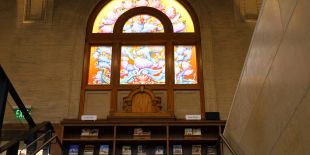
The renovation restores the original entrance at 3359 24th Street and the central staircase that were both removed during the renovation in the 1990s. At the top of the staircase is the crown jewel of the branch, the refurbished main reading room, which features improved lighting, furniture and movable shelving, made possible with the support from the Friends of the San Francisco Public Library. Other amenities include additional restrooms, a study room and a fenced courtyard.
The newly renovated Mission Branch is energy-efficient, seismically safe and resilient to extreme weather and air quality events. It is fully climate-controlled with rooftop solar panels and enhanced air filtration. It was designed to be LEED (Leadership in Energy and Environmental Design) Gold certified to align with San Francisco’s Climate Action Plan goals to achieve net zero greenhouse gas emissions by 2040.
The collection has been refreshed and includes the latest fiction and nonfiction releases, a robust Spanish-language collection and Latino-interest materials thoughtfully integrated throughout the Adult English-language collection. The renovated branch also debuts a vinyl record collection, a first for Mission Branch, joining nine other SFPL locations in offering vinyl to patrons.
The project was funded primarily by the Library Preservation Fund, a voter-approved measure that enables SFPL to finance its own capital projects. Additional support came from a $5.3 million grant from the California State Library’s Building Forward Program and from the Friends of the San Francisco Public Library.
The construction project generated roughly 2% for Art Enrichment funds, which helped the San Francisco Arts Commission select celebrated Bay Area artist Juana Alicia to create a new site-specific public artwork in the form of a large fused-glass window installation for the main reading room. The design, titled NOPAL DE LA MISIÓN, features a monumental prickly pear cactus (nopal) with flowers and fruit that symbolize resistance, sustenance and regeneration. Art Enrichment funds also allowed for the conservation and re-installation of an existing triptych artwork by artist Emmanuel Catarino Montoya commissioned in 1999 that will be sited in the new Community Room.
“Public art helps tell the stories of our neighborhoods and ensures that the communities who shape San Francisco see themselves reflected in our civic spaces,” said Matthew Goudeau, Executive Director of Arts and Culture. “Juana Alicia’s NOPAL DE LA MISIÓN celebrates the rich cultural history and creative spirit of the Mission District. We are proud to partner with the San Francisco Public Library to bring this new work to life alongside Emmanuel Montoya’s triptych from the Civic Art Collection, connecting the neighborhood’s artistic legacy with its future.”
“NOPAL DE LA MISIÓN is a love letter to the community that saw me come of age and mature into the artist I am today,” said Juana Alicia. “Like the nopal itself, a tree that blooms in the desert, this neighborhood has endured and flourished, and I am blessed to have been part of the tapestry of people who have made it a sacred community site. I dedicate this work to my grandmother, who brought me to the public library from the time I began to walk, and to the global communities of writers who keep the human spirit and imagination alive.”