

3:00 - 4:30
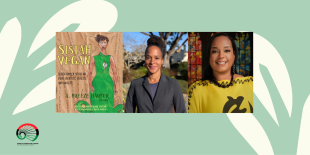
Celebrate the 15-year anniversary of Sistah Vegan, the groundbreaking anthology edited by cultural geographer, author, and public scholar Dr. Breeze Harper, which brought Black women's perspectives into conversation with veganism, food justice and animal ethics.
In this fireside conversation moderated by womanist theologian and vegan scholar Dr. Candace Laughinghouse, Harper reflects on the evolution of the Sistah Vegan Project over the past two decades—from its early beginnings to the publication of Sistah Vegan and its continued influence today. Together, they will explore how the project functioned as an act of Afrofuturist worldbuilding, challenging dominant narratives within vegan movements that often framed ethical food systems as “race-neutral” while overlooking the impacts of racial capitalism, patriarchy and neoliberal food systems. The discussion will also reflect on Harper’s experiences presenting this work across the country, the allies and resistance she encountered and how Sistah Vegan helped inspire new generations to imagine anti-racist approaches to vegan ethics. Situating the project within a longer tradition of Black women’s activism and visionary thought, this conversation highlights the ongoing work of building more just and compassionate futures.
Dr. Breeze Harper is a cultural geographer, Afrofuturist, author, and public scholar whose work explores the intersections of Black feminism, food justice, and vegan praxis during late stage capitalism. She is the editor of the influential anthology Sistah Vegan: Black Women Vegans Speak on Food, Identity, Health, and Society, a pioneering text that brought Black women perspectives into conversations about veganism, health, food systems and social justice. She is also a novelist featuring Black vegan women protagonists in all three upcoming novels The Dragon Comes at Night, Potato Chips and Wine, and Seeds of Sankofa.
Dr. Candace Laughinghouse is Assistant Professor of Theology & Ethics at Gammon Theological Seminary. A womanist scholar, theologian, activist and musician, her work explores the intersections of womanist theology, race, ecology and animal ethics. Drawing on African and Indigenous ecological worldviews, her scholarship examines how womanist thought can challenge multiple forms of oppression, including the exploitation of animals. Laughinghouse’s work centers the interconnectedness of humanity, nature and spirit, arguing that care for animals and the earth is both a feminist and spiritual practice. As a Black vegan scholar, she brings a powerful interdisciplinary lens to conversations about justice, food, faith and liberation.
Connect
Dr. Breeze Harper Facebook | Dr. Breeze Harper Instagram
Dr. Candace Laughinghouse Instagram